
Dissonance
We are closer to each other than it seems

In the present day it has become extremely visible to see the division in our societies; we speak about the impact of social media, contrarian leaders and both sides of the political spectrum, but we rarely discuss how close we are to those who seem far away. It is my belief that a large part of the empathy process is being aware of the overlap between us and ‘the others’. A Venn diagram of two enemies will still show their similar adversity, family, struggle, motivation, happiness, unrest and kindness.
The pyramid of choice is one of my favourite analogies to improve understanding of how and why other people see the world very differently than each other. Essentially it's the people who almost decide to live in glass houses that are the ones who tend to throw the first stones.
Our thoughts and opinions are all shaped initially from external sources like our parents, where we grew up, religion etc etc. Overtime we believe that we develop our own opinions on the world, but most of our opinions are rooted in beliefs that we didn’t really create, we simply reinforced over time.
The pyramid of choice shows two people who are initially quite close to a shared reality or a shared opinion, a good example is two students sitting an exam at school. Student #1 is struggling with a question and looks over at the person next to them, after contemplating for a while they decide that it is okay to cheat on this one question because at the end of the day who cares and they begin to justify their action. Student #2 is struggling with the same question and looks to the person next to them, after contemplating for a while and being very close to cheating, they decide that it is not aligned with their values and they decide not to cheat, immediately justifying their decision as important and right.
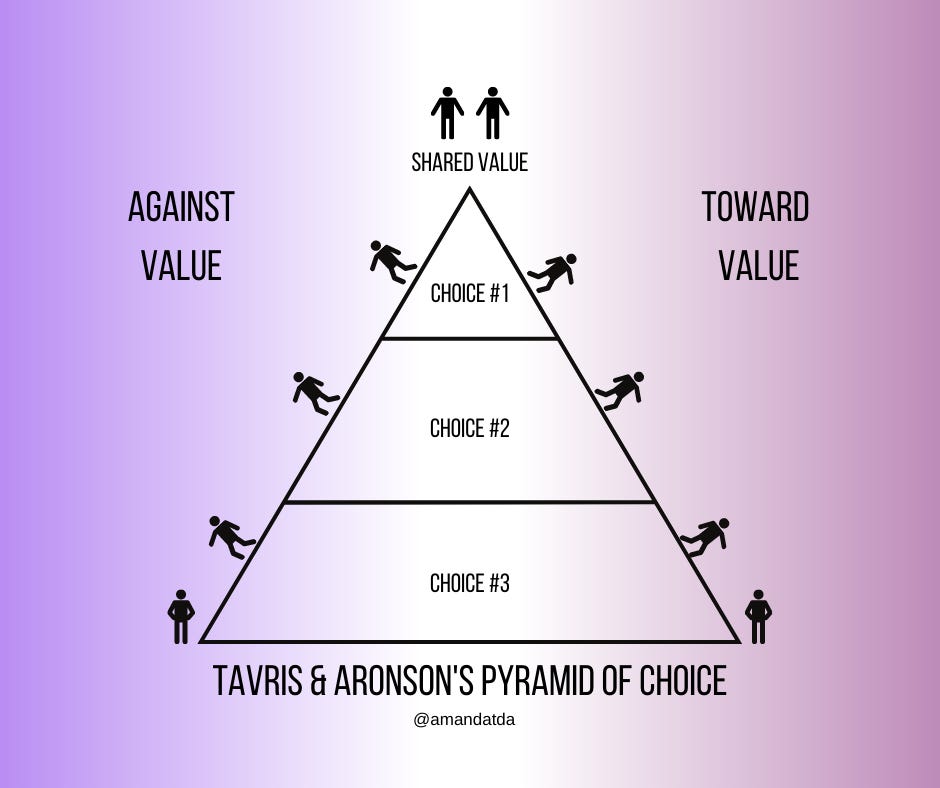
Our brains require us to be the hero of our own story, so when we do something we begin to self-justify. Part of that self-justification is creating a story of how the people who did the opposite action are bad, stupid and perhaps morally wrong; even though we may have been a coin flip away from doing that ourselves. Student #1 starts to think of student #2 as a stuck-up rule follower who thinks they’re above everyone else. Student #2 thinks that student #1 is a lying cheat who can’t be trusted, they say things to themselves like ‘I could never do that, it really is only for the worst’. This is their way of self-justifying the decision they made, especially if it led to a bad outcome.
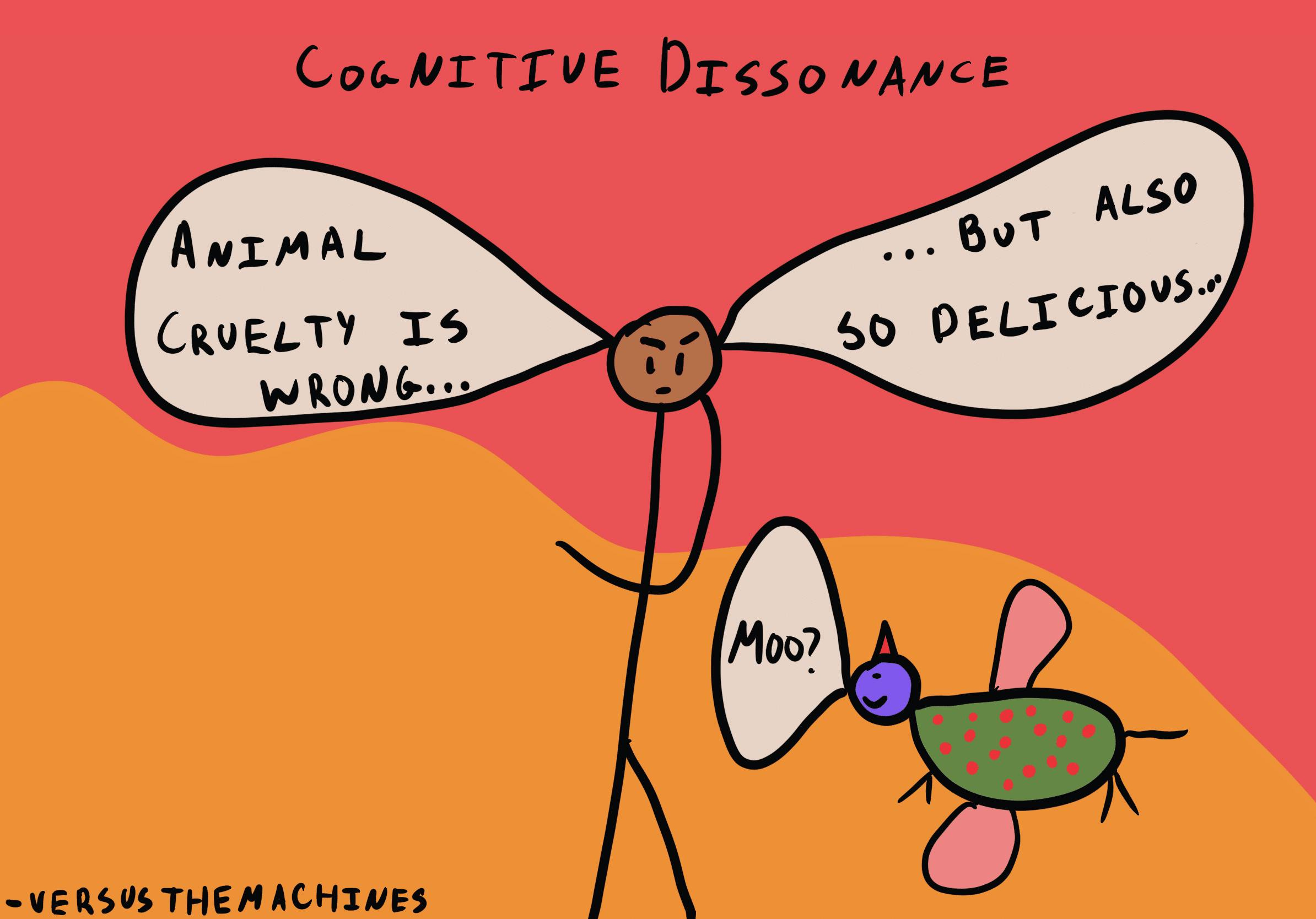
Cognitive dissonance is extremely common in our lives because it is extremely common to hold two conflicting ideals at the same time, we are imperfect beings. I can understand minimalism and appreciate it’s values, but also want to buy a new watch. At some point I make an action and require to self-justify why it was right and the other value I could previously appreciate is actually only for people who are different than myself. The goal here is to catch our brains self-justifying and try to ask ourselves whether we are being objective and thinking with our true values, or if we are just trying to self-justify poor behaviour.
Another example is after having wronged someone, we must believe this person is bad and perhaps even deserved it, or maybe they’ve been basically begging for this for years! We see this from business partners falling out, we see this from couples that have had affairs and it’s present in most white lies. If you hold strong thoughts about someone or something, it’s always a good idea to think about why you hold them and if you were ever in their shoes. For the people you don’t like, perhaps you were one day at the top of the pyramid standing next to each other but through a series of self-justifying actions now feel miles apart.
Nowadays when I hear someone’s opinion or even catch myself in thought, I try to imagine the series of things that led them to have that opinion and it becomes much easier to understand. We can’t fight dissonance, but being aware of self-justification can be really helpful to try and stay objective in an extremely bias world.
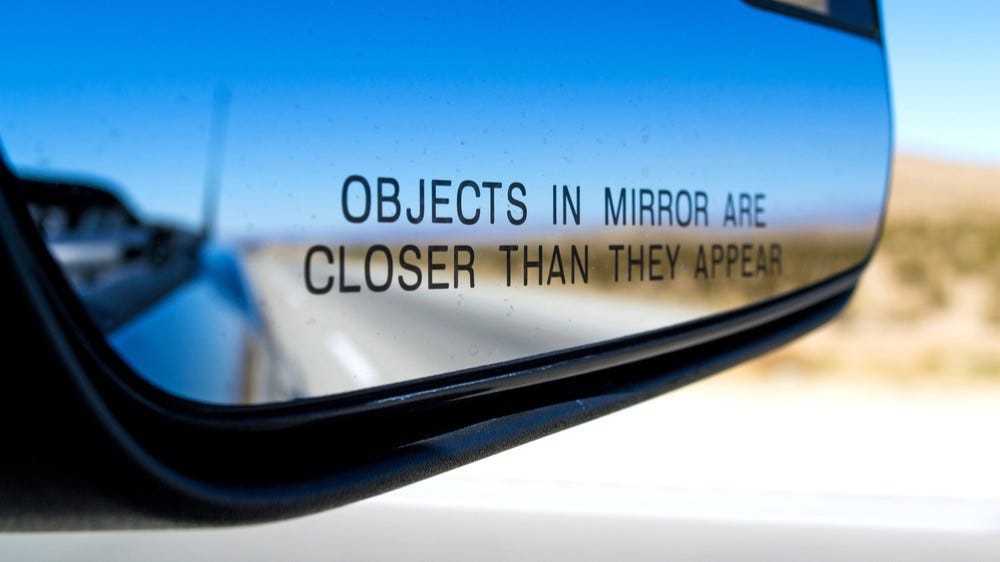
Sometimes it can be powerful to know that you were wrong, and just be okay with it. We are fallible beings and capable of making errors in judgement, that does not make our counterparties the enemy. Life is complex and frequently doesn’t make sense, but you will be more in control of your feelings towards others and more aware of ‘the other side’ if you are empathetic towards the self-justifications that led them there.
Being more understanding is a superpower and will help in all your relationships. Know that those on the other side are much more like you than they may appear, perhaps they are only a handful of key decision and self-justification loops away from exactly where you stand right now.
If you want to know more about this topic, I suggest reading ‘Mistakes Were Made (But Not by Me)’ by Carol Tavris.
Thanks for reading
-Jords